


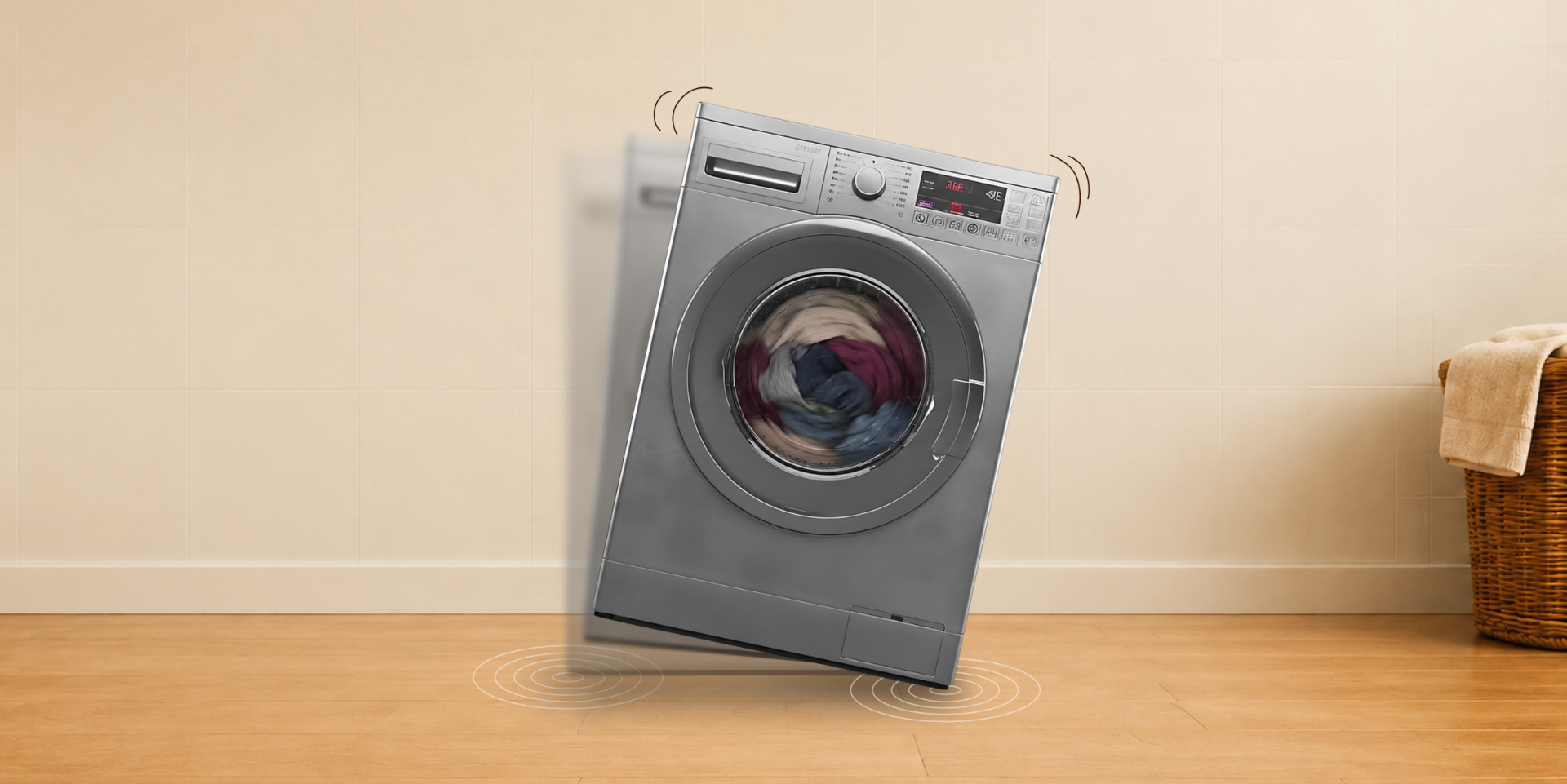

If you've walked into the laundry room mid-spin cycle to find your washer thumping, rattling, or scooted a few inches from where you left it, don't panic. The movement can look alarming, but it doesn't necessarily mean something is seriously wrong with your washer.
Some vibration during a fast spin cycle is normal. The drum is spinning at high speed to remove water from your laundry, so a little movement toward the end of a cycle is not unusual. What isn't normal is a washer that shakes hard enough to move across the floor, repeatedly bangs or thumps, or regularly shifts out of position.
The good news is that excessive shaking doesn't automatically point to a mechanical problem. The cause may be as simple as an unbalanced load, a washer that isn't level, or an installation issue.
Before assuming your washer is broken, work through these checks one by one, starting with the easiest thing to rule out.
1. Check the Laundry Inside Your Washer
An unbalanced load is one of the most common reasons why your washer shakes. It is also one of the easiest things to rule out. So, you can start checking the laundry inside your washer.
During the spin cycle, your laundry needs to stay fairly evenly distributed around the drum. If everything bunches up on one side, the uneven weight can cause the washer to shake, vibrate, or bang as it spins.
Bulky and absorbent items are especially likely to create an imbalance. A comforter, bath mat, towels, or other heavy items can absorb a lot of water and become unevenly distributed. Washing a single large, absorbent item can also be problematic because there may be nothing else in the drum to balance the load.
What to do?
- If your washer starts shaking during the spin cycle, pause the machine and wait until it is safe to open.
- Redistribute the laundry more evenly around the drum.
- If the washer is overloaded, remove some items and check your owner's manual for the recommended load size and cycle for your model.
2. Check If Your Washer Is Level and Stable
If redistributing the laundry doesn't solve the problem, or your washer shakes regardless of what you're washing, check whether the machine is level and stable on the floor.
Make sure all four feet contact the floor firmly. If one foot sits higher than the others, the washer can rock during the spin cycle, causing increased vibration and noise. Manufacturers specifically identify proper leveling and firm contact with the floor as important for reducing excessive vibration.
What to do?
- Do a quick stability check by gently rocking the washer from side to side and front to back. If it moves or teeters, one or more feet may need adjustment.
- Place a bubble level on top of the washer and check it both side-to-side and front-to-back. If the washer isn't level, follow your owner's manual to adjust the feet.
- If your model has locking nuts, tighten them afterward to keep the washer stable.
Note that leveling instructions can vary by model, so follow the instructions for your specific washer rather than adjusting the feet by guesswork.
3. Check the Shipping Bolts on a Newly Installed Front-Load Washer
If your washer is brand new or was recently moved and started shaking right away, check whether the shipping bolts were removed during installation. Front-load washers use shipping bolts to keep the drum secure during transport.
Those bolts need to be removed before the washer is used. If they are still installed, the washer can vibrate, shake, or make excessive noise during a cycle. Shipping bolts are usually located on the back of the washer, but the number and exact location vary by model.
What to do?
- Check your owner's manual or installation guide to confirm where the shipping bolts are located and how to remove them.
- Remove the shipping bolts by following the instructions.
- If you do remove them, check your manual before throwing them away. Some manufacturers, including LG and Samsung, recommend keeping the bolts because you may need them if you move the washer again.
If the shipping bolts have already been removed and the washer still shakes, move on to the next check.
4. Check If the Floor Is Contributing to the Shaking
Even if your washer is level, the floor beneath it must also be stable. A floor that flexes, sags, or bounces can make normal washer vibration feel much stronger, especially during a high-speed spin cycle.
Pay attention to the floor while the washer is running. Does the floor vibrate or bounce along with the machine? If the washer is already level and firmly touching the floor but you can still feel movement through the floor, the surface underneath may be contributing to the problem.
What to do?
Check your washer's installation guide for its flooring requirements. If the floor flexes or doesn't feel sturdy enough to support the washer, it may need to be reinforced or assessed before you continue adjusting the machine.
Pay Attention to Signs of a Mechanical Problem
If you've redistributed the laundry, checked that the washer is level and stable, ruled out shipping bolts, and checked the floor, but the washer still shakes hard, the problem may be inside the machine. This is especially worth considering if your washer used to run normally and the shaking has gradually gotten worse.
The exact cause depends on the washer. Worn shock absorbers can cause excessive movement in some front-load washers, while top-load washers may develop problems with suspension rods, springs, or other components that help keep the tub stable.
Unlike the checks above, diagnosing these internal components usually requires getting inside the washer. Instead of taking the machine apart yourself, look for these signs that it's time to call a repair technician.
1. The Washer Shakes Violently During Most Loads
One unbalanced load can make a washer shake. But if strong shaking happens during most loads, even after you've redistributed the laundry, the problem may no longer be the load itself.
2. You Hear Loud Banging or Grinding
Shaking accompanied by repeated banging, knocking, or grinding deserves more attention. If these noises are new, happen regularly, or are getting worse, have the washer inspected.
3. The Drum Feels Loose or Unstable
Some movement of the tub or drum is normal. However, unusual looseness, an off-center position, or movement accompanied by hard banging may indicate a problem with the components supporting it.
4. The Washer Keeps Walking Across the Floor
If you've already checked the laundry, leveling, shipping bolts, and floor, but the washer still moves during normal loads, an internal component may not be controlling the movement properly. Don’t hesitate to call the repair team.
2. You Notice Leaking, a Burning Smell, or Electrical Problems
Vibration combined with water leaking, a burning smell, smoke, sparking, or another electrical problem should not be treated as a simple balance issue. Stop using the washer and have it inspected before running another cycle.
If you're seeing any of these signs, our service team can inspect the washer and determine what's causing the excessive movement.
Is It Time to Repair or Replace Your Shaking Washer?
Finding a mechanical problem does not automatically mean you need a new washer. The decision to repair or replace depends on the washer's age, overall condition, and the cost of the repair.
If the washer is otherwise in good condition, repairing it may still be worthwhile. If it is older, showing other signs of wear, or facing an expensive repair, replacement may be the better option.
A new washer is another purchase you will likely live with for years, so take some time to consider what you need from the next one. Think about your usual load size, available space, preferred washer type, and the features you will actually use before buying a new washer.
Browse our washer selection to compare models across different sizes, features, and budgets. If you still need help choosing the right replacement, you can contact our team. We'll help you find a washer that fits your home and laundry needs.